
Flexible Actuation Extruder with intrinsic sensing for 3D printing of viscoelastic material
October, 2022 - Present
All hardware in this research displayed below is developed solely by myself, however, the concept, firmware, and experimental design are the result of an intensive collaboration between my colleagues. In this research, I proposed a flexible actuation method for precise actuation of viscoelastic material, powered by intrinsic sensing ability to sense extrusion pressure and flow rate, together with material properties.
I developed my printhead to work on a commercially available cartesian robot. The prototype of this concept also facilitates my specially designed magnetic adapter, which interfaced the extruder with the printer physically and electrically. This allows for easy refilling and replacing the extruders.
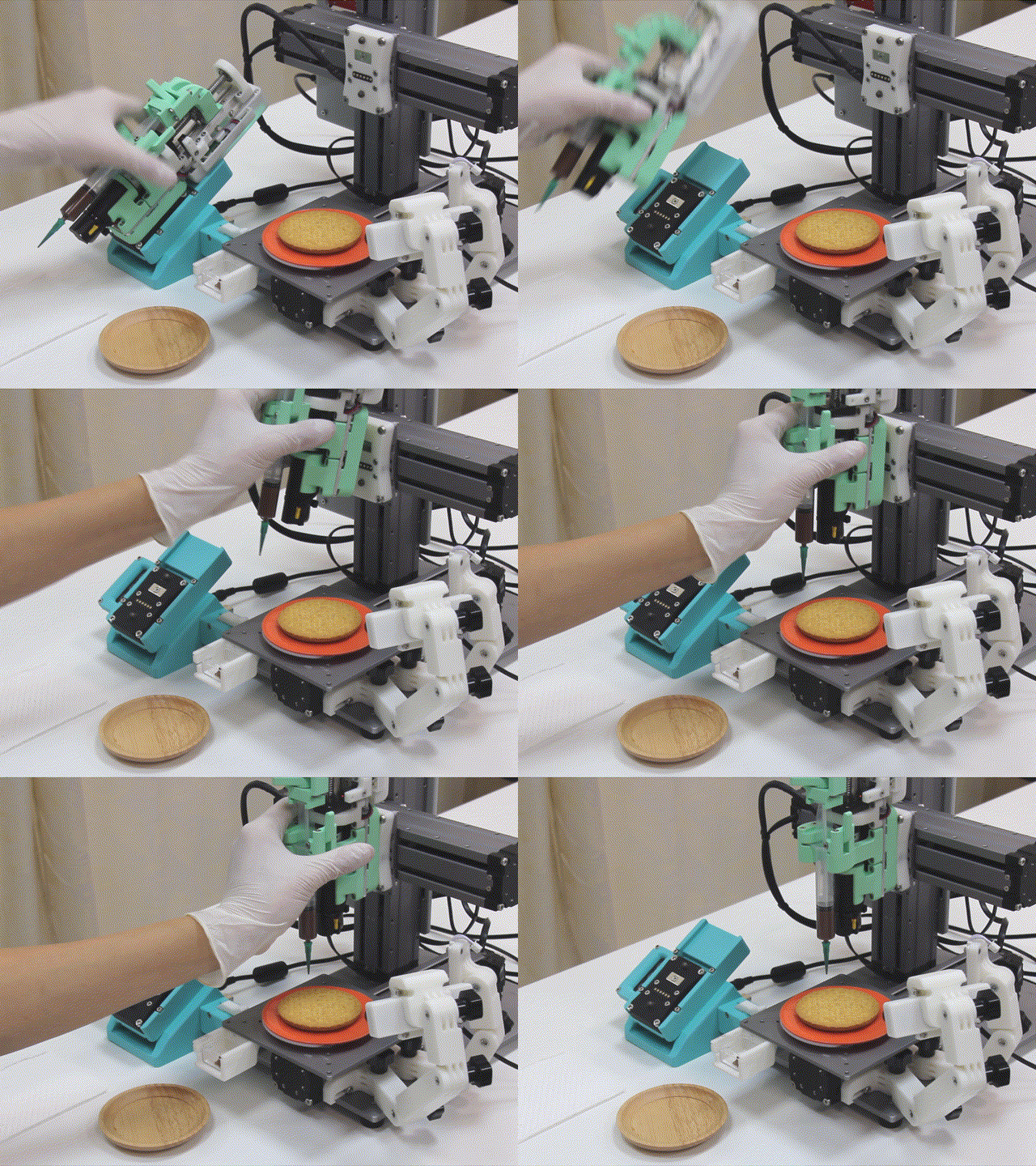
Demonstration of the prototype of a flexible actuation extruder. The specially designed magnetic adapter allows seamless connection/disconnection of the extruder.
The proposed extruder exhibits extreme adaptability. It can print a wide range of materials precisely without any tuning required, thanks to its volumetric-driven mode. The modular design allows the attachment of special equipment such as the UV curing tool.
The 3D printing of silicone sealant (Left), chocolate fudge (middle), and UV resin (right).
Following the optimization of the design for batch production, I extended the impact of my work by manufacturing and distributing 3D printers to other research groups interested in 3D printing soft materials, particularly viscoelastic substances.
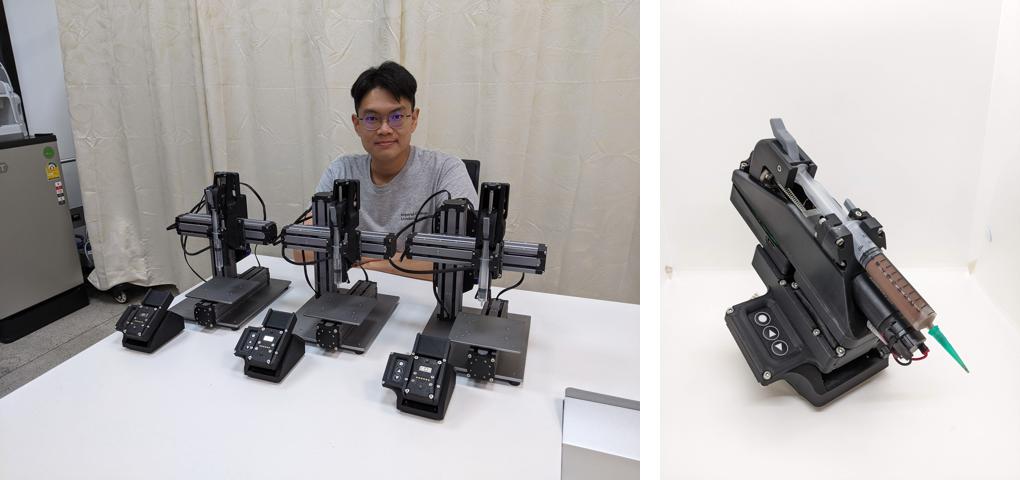
These research groups included Dr. Piyarat Silapasuphakornwong at Bangkok University, who applied the technology to 3D print food and translucent materials, as well as the Veterinary Clinical Stem Cells and Bioengineering Research Unit at Chulalongkorn University, which used the technology for 3D printed scaffolds using a wide range of biogels.
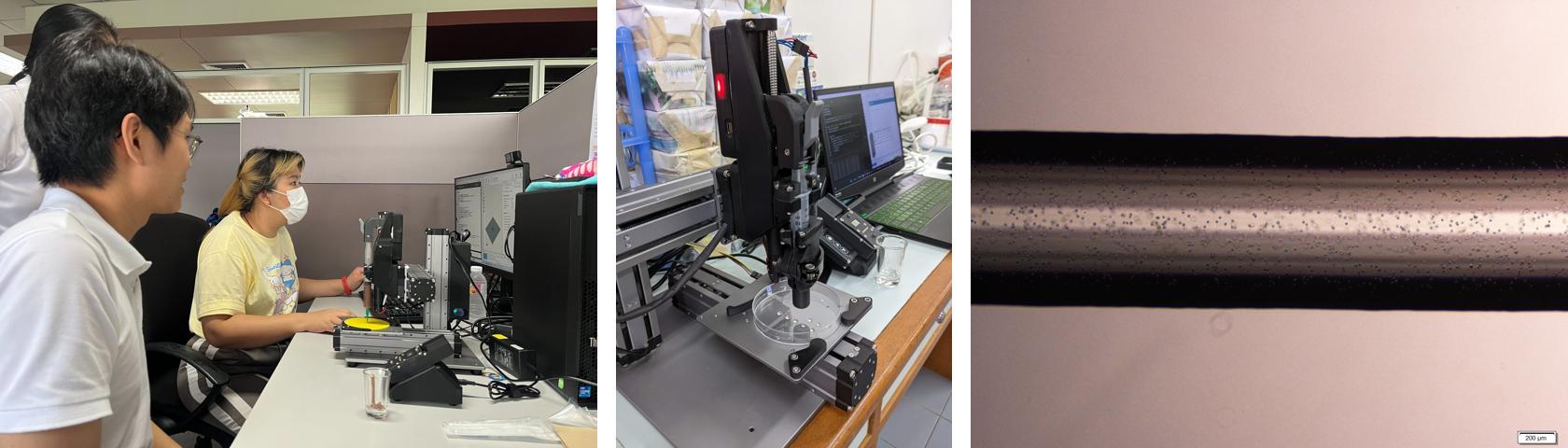
Introduction of my 3D printer to Dr. Piyarat Silapasuphakornwong (Left). My 3D printer was used for the 3D printing of biogel in the Veterinary Clinical Stem Cells and Bioengineering Research Unit, at Chulalongkorn University (Middle). The printed line of type I collagen with encapsulated mouse fibroblast L929 cells is shown as small dots distributed inside the line (Right).
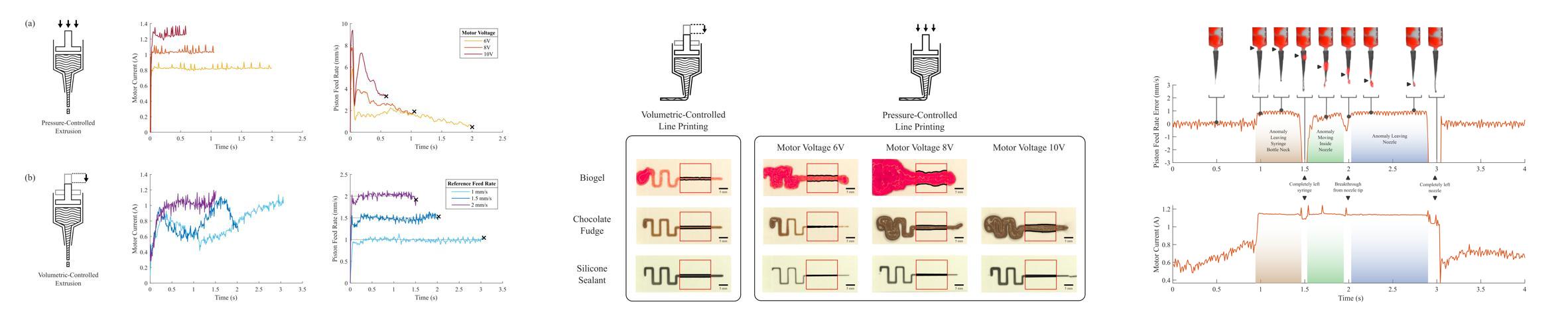
My publication about this extruder is currently under the reviewing process of the International Journal of Advanced Manufacturing Technology. The paper highlights the extruder’s ability to switch between pressure-control and volumetric-control modes, demonstrating the impact on the printing of various materials. The paper also showcases the real-time material property sensing capabilities of the printhead.
For more details about this paper, please see this page.