
Temperature-Controlled System for the 3D Printing of Hydrogel
May, 2019 - July, 2021
I started this research in May 2019, in the summer break of my 2nd year of undergraduate degree. I wish to participate in highly multidisciplinary research to enhance my experience and pursue my goal as a researcher. Driven by a keen interest in 3D printing technology, I reached out to Dr. Ratchatin Chancharoen, who generously invited me to join the “Temperature-Controlled System for the 3D Printing of Hydrogel” research.
My initial focus was on hardware design, specifically the creation of a cold print bed and a heated syringe pump extruder. The cold bed featured a thermoelectric element that transferred heat from the print surface to a reservoir below. Meanwhile, a nichrome wire served as the heating element for the extruder, with silicone sheet insulation. I implemented a customized 3D printing firmware to precisely regulate the temperature of both components.
The first functional prototype of a 3D bioprinter with a temperature control system (Left). The polka dot printing of gelatin demonstrates the precision of the syringe pump extruder. The temperature of the printhead is controlled at 37°C and the bed at 4°C (Right).
After several months of dedicated work, I successfully achieved a functional temperature-controlled system for the 3D printer. I made significant improvements to the cold bed, replacing the reservoir with a coolant circulation system. My research culminated in the publication of my first academic paper on this topic at the 9th IEEE International Conference on Cybernetics and Intelligent Systems (CIS) and the IEEE Conference on Robotics, Automation, and Mechatronics (RAM) in late 2019.
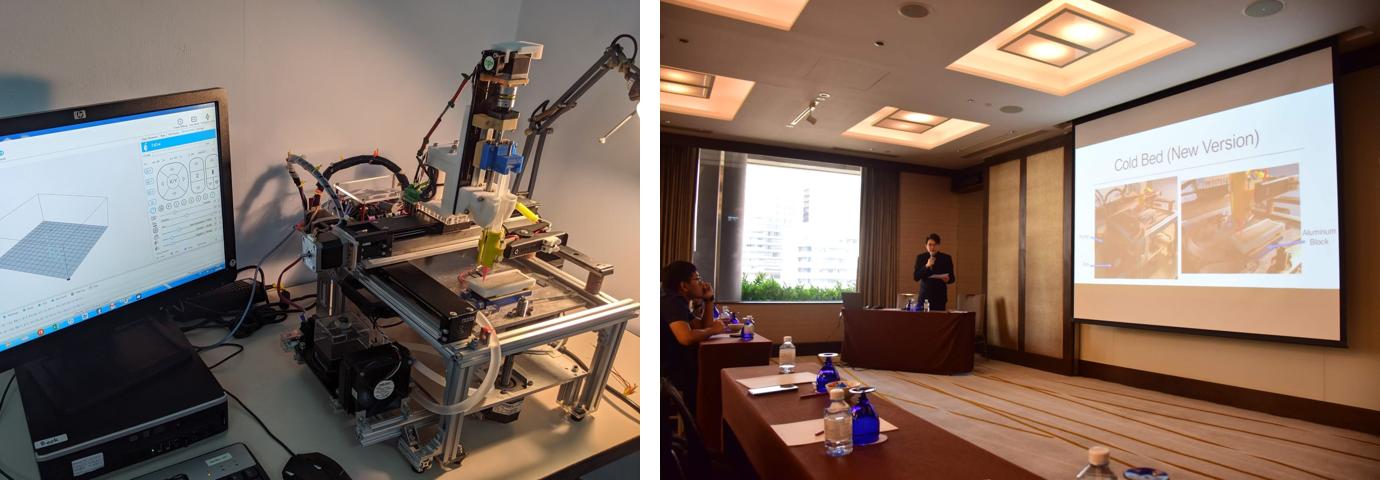
The 2nd generation hardware with the coolant loop (Left). Presentation of my paper on temperature control for hydrogel bio-printing at the 9th CISRAM IEEE conference (Right).
Motivated by my achievements and intrigued by the complexities of this field, I continued my involvement with 3D bioprinting technology as a part-time research student throughout the remainder of my undergraduate degree. In 2021, I provided support to tissue research at my university, utilizing EnvisionTEC’s 3D-Bioplotter to print extracellular matrix (ECM) scaffolds for the 3D cultivation of a wide range of mammalian cells.
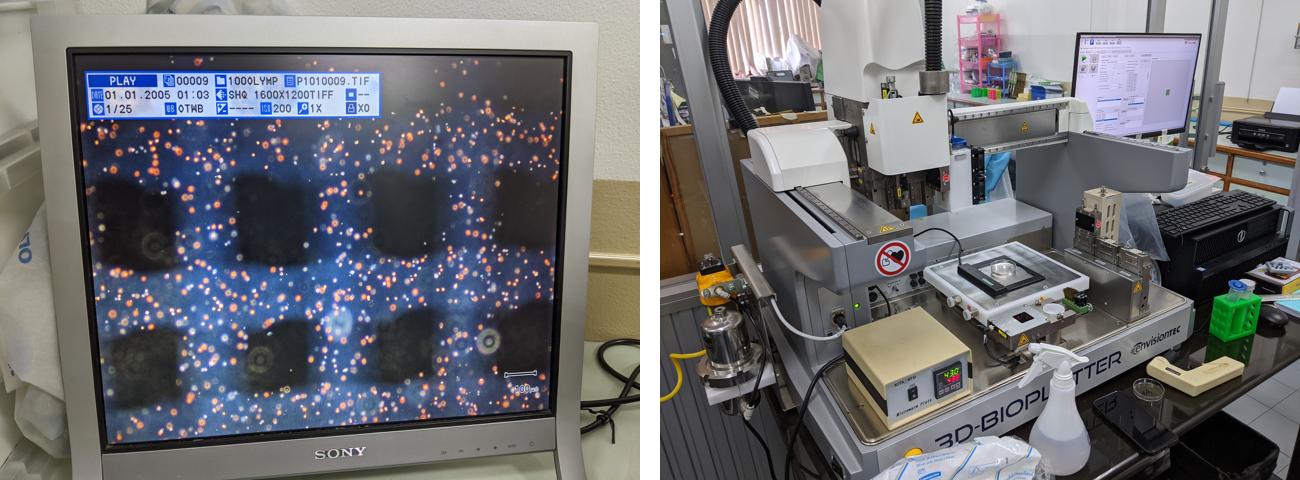
Dog keratinocyte cell encapsulated in collagen type I scaffold and dye with phenol red (Left). EnvisionTEC’s 3D-Bioplotter (Right).
This practical experience provided me with invaluable insights as a user, which I used to develop a more advanced and user-friendly 3D bioprinter. Recognizing the limitations of commercial printers due to warranty constraints and material restrictions, I created a highly customizable and cost-effective 3D bioprinter. Utilizing syringe pump extrusion with a positive displacement pump, this printer allowed for precise printing with an extensive range of materials. My innovative 3D bioprinter was proudly displayed at Thailand’s Inventor Day in 2022.
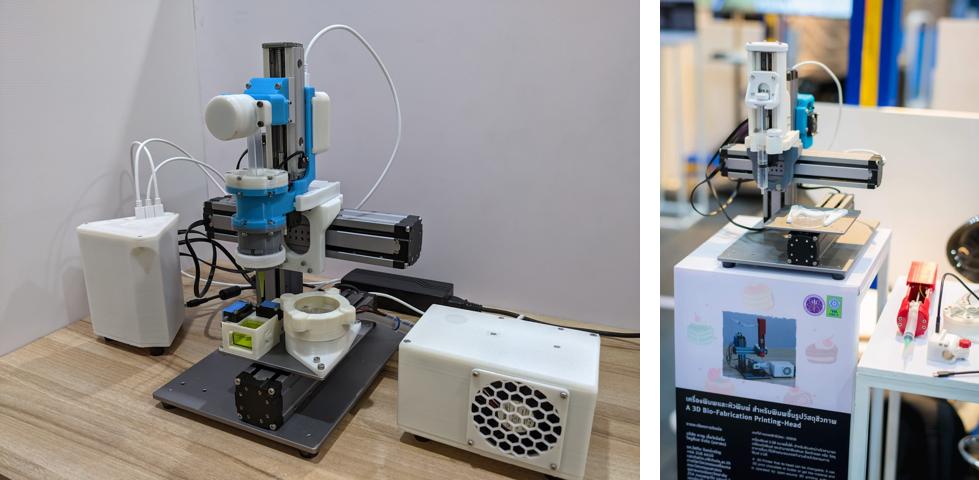
3rd generation of the 3D bioprinter with an expanded range of print bed temperature control and nozzle calibration system (Left). My 3D bioprinter on display at Thailand’s Inventor Day in 2022 (Right).
The printing of gelatin hydrogel (Left) and silicone sealant (Right). Demonstrating the flexibility of the extruder with a wide range of materials. The hydrogel is printed with a heated syringe pump extruder on the cold print bed.